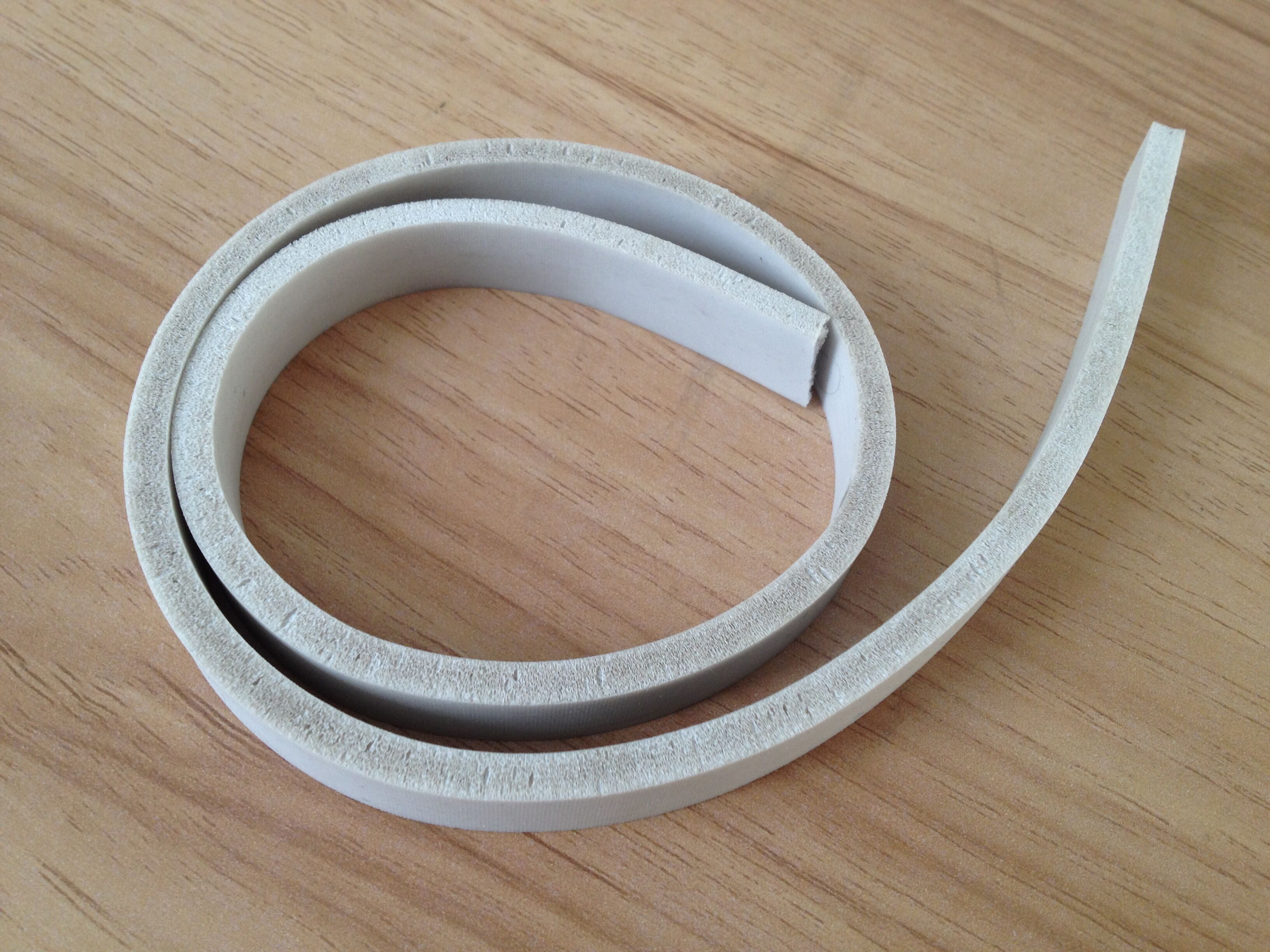
In industrial manufacturing and daily necessities production, the demands for shock absorption, buffering, and filling are ubiquitous. A high-performance material can often drive a qualitative leap in product quality. Recently, the two-component liquid foam silicone IOTA-F663A,B has emerged as a "new choice" for manufacturing seals, shock-absorbing plates, filling accessories, and more, injecting new vitality into upgrading product experiences across multiple fields—thanks to its soft texture, flame-retardant properties, and flexible processing advantages.
The core strength of this liquid foam adhesive lies in the "soft, low-density silicone" formed after foaming. Lightweight and elastic like a sponge, it is far more durable than ordinary sponges: it compresses quickly to buffer force and rebounds rapidly without permanent deformation when pressure is released. Shock-absorbing silicone foam plates made from it effectively absorb vibrations during equipment operation and reduce noise. When used as filling accessories for bags, it avoids the discomfort of hard fillers while maintaining the bag’s structured shape, balancing comfort and aesthetics. Most notably, it boasts flame-retardant performance, reducing combustion risks even when exposed to high temperatures or open flames, adding an extra layer of safety to products.
Its flexible mixing ratio and convenient operation make it highly popular in production. Featuring a two-component design, it offers adjustable mixing ratios of 1:1 or 10:1 by weight, adapting seamlessly to both small-batch manual production and large-scale automated manufacturing. Under conventional conditions (25℃, 65% humidity), it provides a 3-minute working time after mixing, giving workers ample time to adjust coating and pouring details. It achieves initial curing in just 6 minutes, significantly shortening production cycles and eliminating the hassle of long curing waits with traditional materials. With a viscosity of 20,000±1,000 cps, the material neither flows arbitrarily due to excessive thinness nor becomes unmanageable due to over-thickness, enabling smooth coating and pouring for easy fabrication of products in various shapes.
In terms of application scenarios, its "capability scope" is extremely broad. Silicone foam seals made from it are used for sealing gaps in doors, windows, and equipment, combining shock absorption and dust resistance. Sponge tubes for transfer rollers in copiers and printers reduce frictional damage during equipment operation and extend service life. It also works as silicone foam insulation tubes to provide thermal protection for pipelines. Its translucent appearance further expands design possibilities, perfectly suiting products requiring invisible filling and accessories pursuing a minimalist texture.