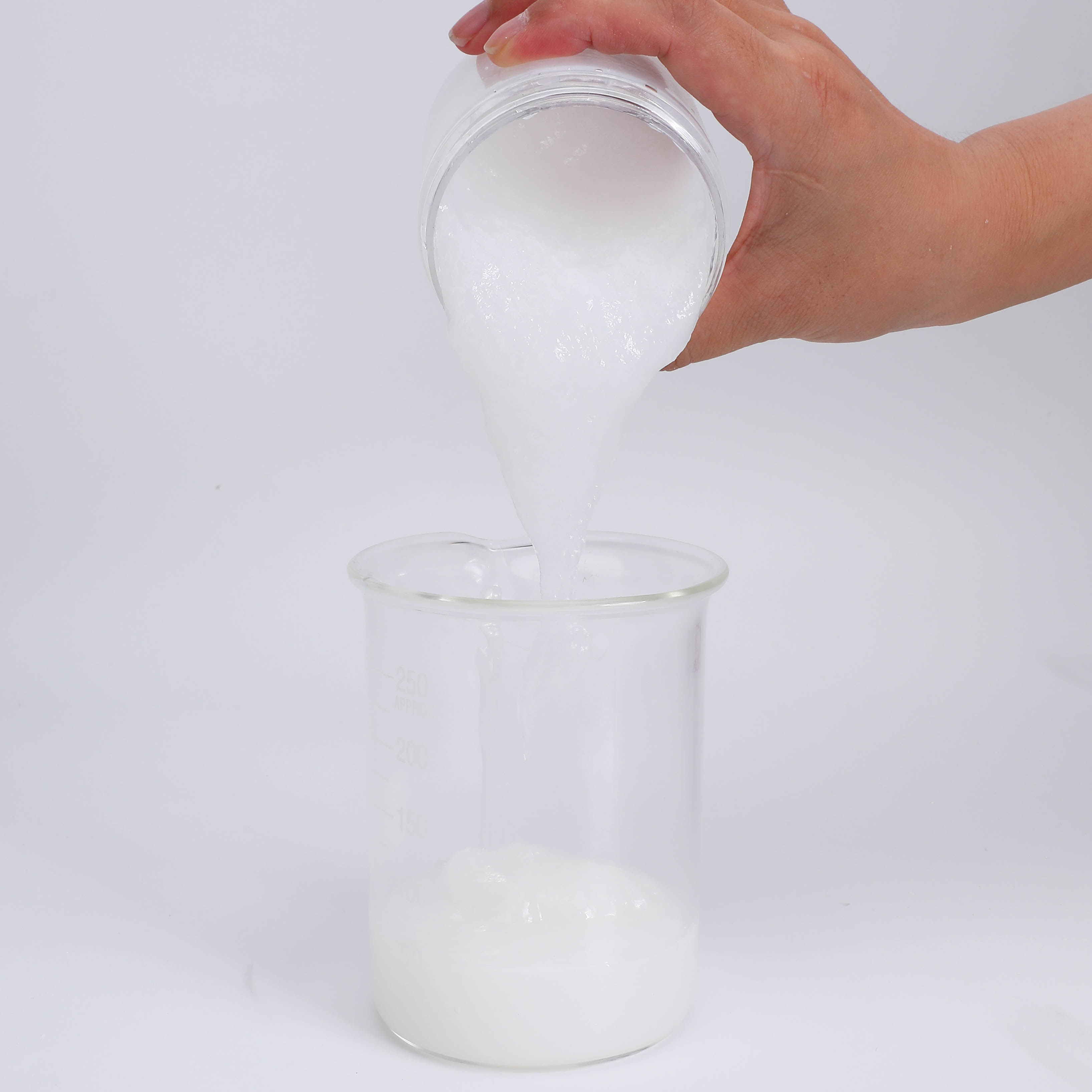
In the production of fire protection materials, choosing the right silicone coating is crucial, as it directly determines the safety performance and service life of protective products. Recently, a specialized addition-cure silicone for high-strength fire-resistant fabrics—IOTA M20-50/M30-50—has addressed numerous industry pain points with its outstanding comprehensive performance and quickly emerged as a "new favorite" in the fire protection material sector.
What makes this silicone most impressive is its dual protection of "flame retardancy + high strength". For fire-resistant fabrics, flame retardancy is a core requirement, and this silicone can remain stable in flames, effectively inhibiting combustion and preventing the rapid spread of fire through the fabric. At the same time, it boasts excellent strength: the cured coating is tough and durable, and even under high-temperature baking or external impact, it is not prone to cracking or peeling. This ensures the fire-resistant fabric maintains a complete protective form at all times, playing its maximum role at fire sites and safeguarding lives and property.
Its excellent adhesion to fiberglass fabrics is yet another major "plus point". As the core base material of fire-resistant fabrics, the bonding degree between fiberglass fabric and silicone directly affects product quality. In the past, some silicones failed to adhere firmly to fiberglass fabrics, easily delaminating after several uses or washes, which severely compromised fire protection effects. In contrast, this silicone can bond tightly with fiberglass fabrics, like putting a "protective armor" on the fiberglass fabric. No matter what environmental tests it undergoes, it can maintain stable adhesion, ensuring the fire protection performance of the fabric remains uncompromised.
The feature of efficient and convenient operation has also made it highly praised in the production process. It exhibits excellent thixotropy, which can be simply understood as "stable when it needs to be stable, and flowable when it needs to flow": it will not flow randomly when stationary, allowing workers to accurately position the coating area; during blade coating or dip coating, it can flow smoothly, covering the substrate surface evenly and easily forming a flat coating. Moreover, its mixing ratio is simple—components A and B can be used after mixing at a 1:1 ratio, no complex adjustment is required. Even new operators can master it quickly, greatly shortening production preparation time and improving overall processing efficiency.
In terms of technical parameters, the two models have their own focuses: the tensile strength of M30-50 reaches 6.5MPa, which is more advantageous than M20-50’s 5.5MPa, making it suitable for scenarios with higher requirements for material strength. Both models have a hardness of 50 Shore A, balancing protection and flexibility. Their elongation of 250% and tear strength of 16KN/m also ensure the durability of the material. Beyond fire-resistant fabrics, it is also applicable to other blade-coated and dip-coated products, providing reliable support for more protection scenarios and contributing to the quality upgrade of the safety protection field.