In humid and stuffy environments, coated products are prone to mold growth. This not only affects their appearance but also may pose health risks. Recently, a new type of addition-cure silicone rubber specifically for mold resistance has been launched. With its three key advantages—"strong mold resistance, high adhesion, and easy operation"—it has become a "great helper" in solving mold problems, allowing coated products to stay fresh and clean even in humid environments.
Its core highlight is "excellent mold-resistant effect". It can inhibit mold growth from the source. Even when used for a long time in humid scenarios such as bathrooms, basements, and outdoors, the surface of the coated product is less likely to develop mold spots. For example, when applied to waterproof glass fiber cloth in bathrooms, traditional materials tend to grow mold quickly due to humidity. However, after coating with this silicone rubber, the cloth surface can remain clean for a long time. This eliminates the need for frequent cleaning and prevents the spread of mold spores that harm health.
High adhesion to substrates ensures longer-lasting protection. After curing, it adheres firmly to the substrate surface, with a tear strength of ≥10KN/m. Even when subjected to friction, impact, or temperature changes, the coating will not peel off or crack. Take coated fabrics used outdoors: despite wind, rain, and humidity fluctuations, the adhesive layer remains stably attached, leaving no room for mold to grow. This significantly extends the product service life and reduces replacement costs.
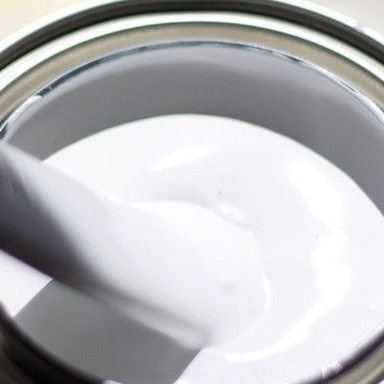
Operational convenience also adds great value to production. The viscosity of Component A after stirring at 23℃ is 1000mPa·s, providing moderate fluidity. It uses a mixing ratio of 2:100 (Component A to Component B), which can be used by accurately weighing the two components by weight—no complex mixing tools are required. Meanwhile, it supports multiple processes such as blade coating and dip coating. Whether for large-area coating or fine-parts processing, it ensures uniform coating and reduces residual air bubbles. Additionally, the color of Component B is customizable, allowing adjustments to meet the appearance requirements of different scenarios and further expanding its application range.
Currently, this silicone rubber has become a preferred material for mold-resistant special adhesives and is also suitable for other blade-coated and dip-coated products. Its launch not only solves the mold problem of coated products in humid environments but also provides an efficient and reliable material solution for manufacturing enterprises.