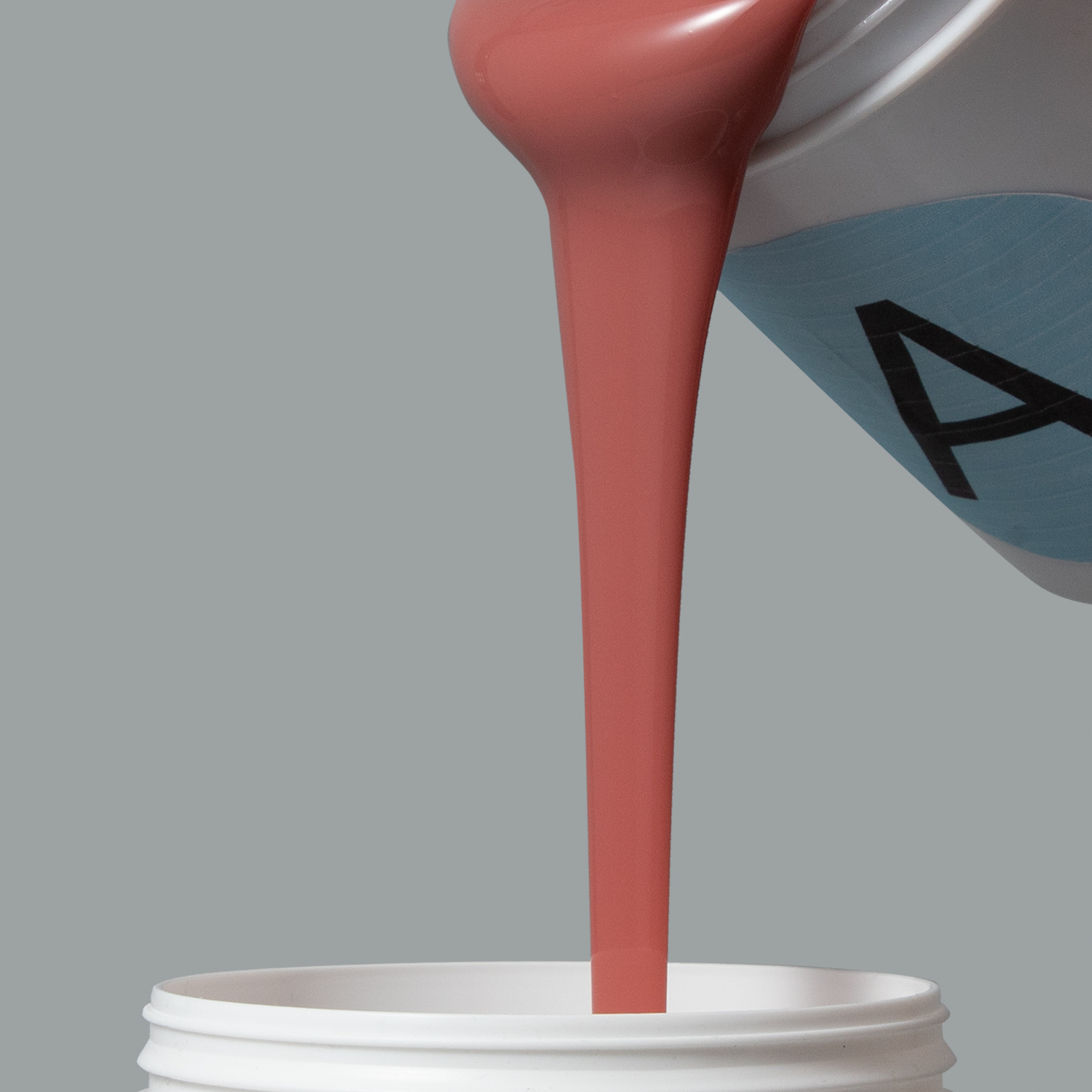
In the production of high-strength fire-resistant fabrics, the coating process often faces issues such as "poor material fluidity, difficult filling of flame retardants, and weak adhesion to glass fiber fabrics". These problems not only reduce production efficiency but also create potential risks in protection. Recently, a new low-viscosity addition-cure silicone rubber, specifically designed for fire-resistant fabrics, has been launched. With its excellent fluidity and adhesion, it easily solves these pain points and has become a "valuable production assistant" for fire-resistant fabric manufacturers.
Its Most Outstanding Advantage: "Low Viscosity for Easy Operation"
After stirring at 23°C, Component A has a viscosity of only 1000 mPa·s, equivalent to a low-consistency liquid state, ensuring smooth flow. This property allows it to easily fill various flame-retardant materials. No additional extrusion force or repeated stirring is required, enabling uniform distribution of flame-retardant components in the material and ensuring the flame-retardant effect of the fire-resistant fabric from the source. Even in complex coating processes, it can quickly cover the surface of glass fiber fabrics, reduce residual air bubbles, and improve coating quality.
Strong Adhesion to Glass Fiber Fabrics Is Also Unignorable
After curing, it can firmly "grip" the glass fiber fabric without delamination or peeling. For example, fire-resistant fabrics used in building fire barriers are exposed to long-term wind, sun, and temperature changes, yet the bonded areas remain stable. This effectively prevents the decline in fire-resistant performance caused by coating peeling. Such reliable adhesion ensures that fire-resistant fabrics can provide stable protection in various harsh scenarios.
Comprehensive Considerations for Production Compatibility
It supports multiple processes such as blade coating and dip coating, and can flexibly handle both large-area coating and fine-part processing. Meanwhile, it adopts a mixing ratio of 1:10 for Components A and B. Although this ratio differs from the common 1:1, operation only requires accurate proportioning by weight—no complex calculations are needed. Workers can master the operation proficiently after simple training, reducing operational errors.
Current Application and Significance
Currently, this silicone rubber has become the preferred material for fire-resistant fabric-specific adhesives and is also suitable for other blade-coated and dip-coated products. Its emergence not only makes fire-resistant fabric production more efficient but also provides more reliable material support for fire safety protection, ensuring that fire-resistant fabrics truly achieve "no gaps in protection".