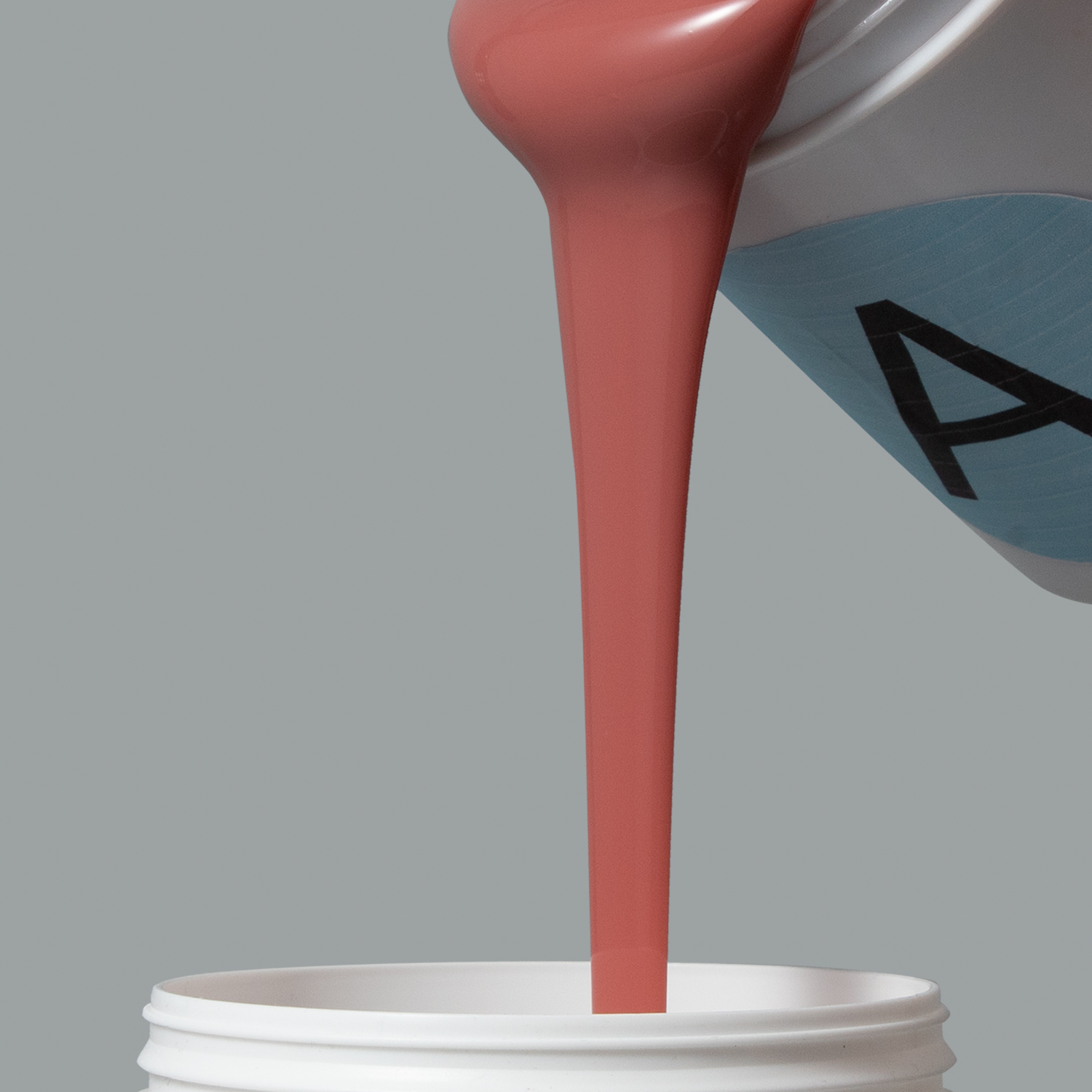
For fiberglass coating enterprises, the "troublesome mixing, difficult storage, and laborious cleaning" of materials add extra burden to production. Recently, a fiberglass coating silicone has become a "great helper" for streamlining production processes, thanks to its user-friendly features of "easy operation, convenient storage, and simple cleaning". It allows enterprises to focus more energy on improving product quality.
1. Worry-free Production Operation
The two components (A and B) require no complex pre-treatment. They are filtered and degassed before leaving the factory, and can be used directly after mixing in proportion.
-
When paired with metering and mixing equipment, it enables automatic pumping and precise proportioning. No air is mixed in the entire process, reducing product defects caused by air bubbles.
-
Even if air bubbles are accidentally mixed in during mixing, the issue can be quickly resolved through vacuum degassing. There is no need to re-prepare materials, which reduces waste.
2. Relaxed Storage Conditions, Reduced Inventory Pressure
It does not require a special low-temperature environment and can be stored at room temperature (not exceeding 32°C) with a shelf life of up to 9 months.
-
Enterprises can stock up flexibly according to order volume, eliminating the need for frequent purchases.
-
After mixing, it has a 48-hour pot life at 25°C. The prepared material can be used in batches, avoiding waste caused by rapid curing of materials. This is especially suitable for small-batch, multi-batch production.
3. Time-saving and Labor-saving Cleaning
Uncured silicone can be easily removed with common hydrocarbon solvents. There is no need to buy expensive special cleaners or wipe equipment repeatedly.
-
For example, uncured material residue on coating molds can be cleaned by spraying solvent and wiping briefly. This significantly shortens equipment cleaning time and allows the production line to start the next round of production faster.
In terms of performance, it is also outstanding — it has high strength and good adhesion, and can meet the coating needs of various substrates such as fiberglass, fabrics, and sponges. The emergence of this silicone not only solves the "usage pain points" of coating materials, but also helps enterprises reduce costs and improve efficiency by simplifying processes, making it a practical choice in the fiberglass coating industry.