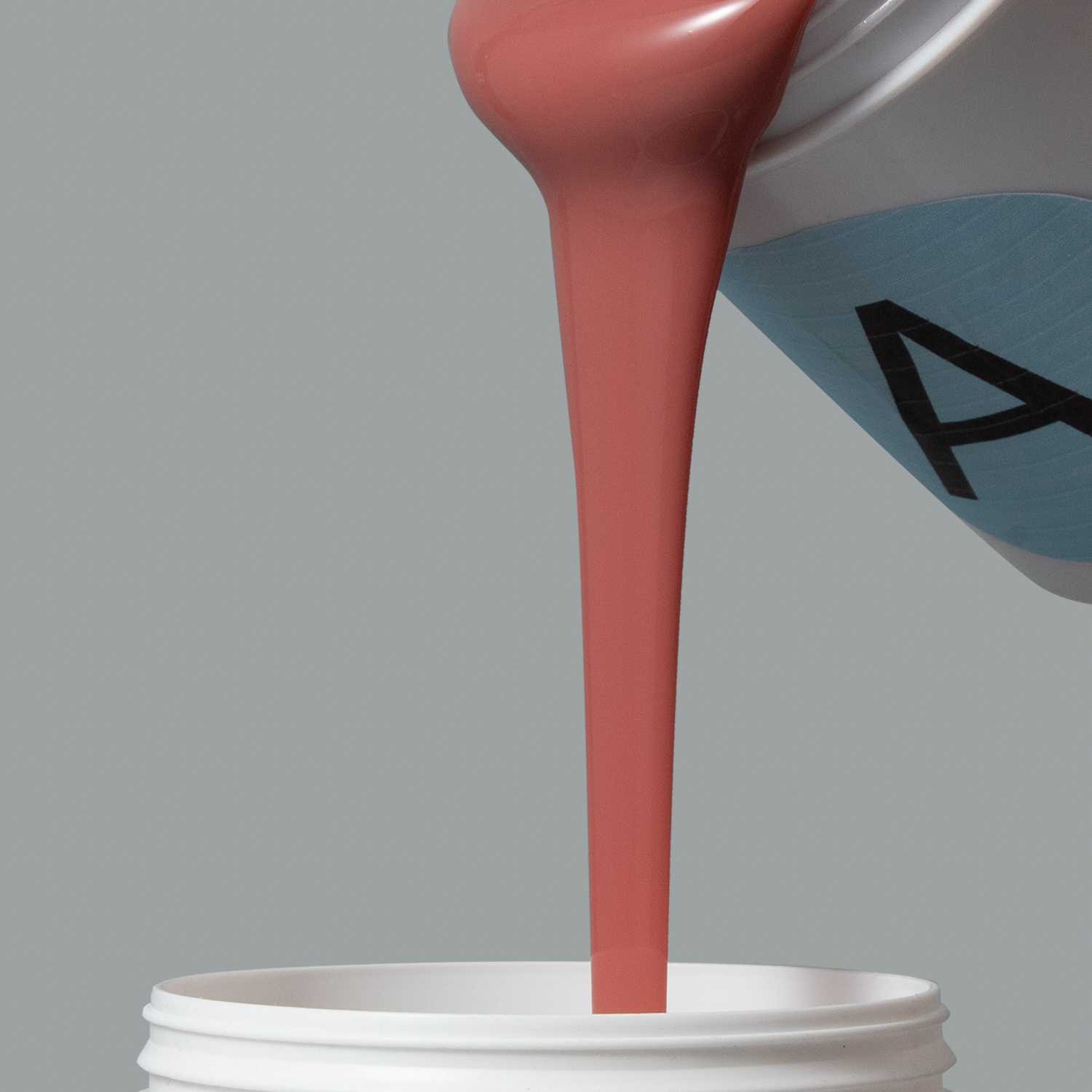
For fire-resistant fabric manufacturers, the efficiency of the glue coating process directly affects overall production capacity. Traditional high-viscosity coating materials often slow down the production rhythm due to "slow flow, difficult filling, and sticky molds that are hard to clean." However, a brand-new low-viscosity, high-strength silicone rubber specifically designed for fire-resistant fabrics is accelerating production by leveraging its advantages of "efficient coating, easy cleaning, and wide adaptability."
Efficient Coating: Its Core Competitiveness
The low-viscosity Component A has strong fluidity, enabling it to quickly cover the surface of glass fiber cloth during coating. Compared with high-viscosity materials, the coating speed is increased by nearly 30%. Additionally, it can automatically fill mold gaps and gaps in flame-retardant materials, eliminating the need for workers to repeatedly scrape, coat, or press—greatly reducing manual operation time. Take a fire-resistant fabric production line as an example: after using this silicone rubber, dozens more rolls of fire-resistant fabric can be produced daily, resulting in a remarkable improvement in production capacity.
Easy Cleaning: Saving Time in Production
Its low viscosity also saves considerable time in production cleaning. After using the coating equipment, residual materials are easier to clean—ordinary cleaning agents can quickly remove them, without the need for special solvents or repeated wiping. This not only reduces equipment maintenance time but also prevents residual materials from curing and affecting subsequent use, extending the service life of equipment and lowering production costs.
Wide Adaptability: Surpassing Traditional Materials in Application Scenarios
In terms of application scenarios, its adaptability far exceeds that of traditional materials. Besides being a special adhesive for fire-resistant fabrics, it can also be used in other scraping and dipping products—such as fire-resistant wrapping materials for industrial pipelines and fire-resistant isolation pads for laboratories. Furthermore, it supports color addition in Component B: after uniform stirring, it can be mixed with Component A, allowing product customization according to color requirements of different scenarios, which further expands its application range.
The emergence of this low-viscosity silicone rubber not only solves the "efficiency pain point" in fire-resistant fabric production but also provides a higher-quality material option for the industry. It is believed that with its widespread application, it will drive fire-resistant fabric production into a new stage of "high efficiency, high quality, and low cost" and inject new vitality into the fire safety industry.