Hits: 616 img
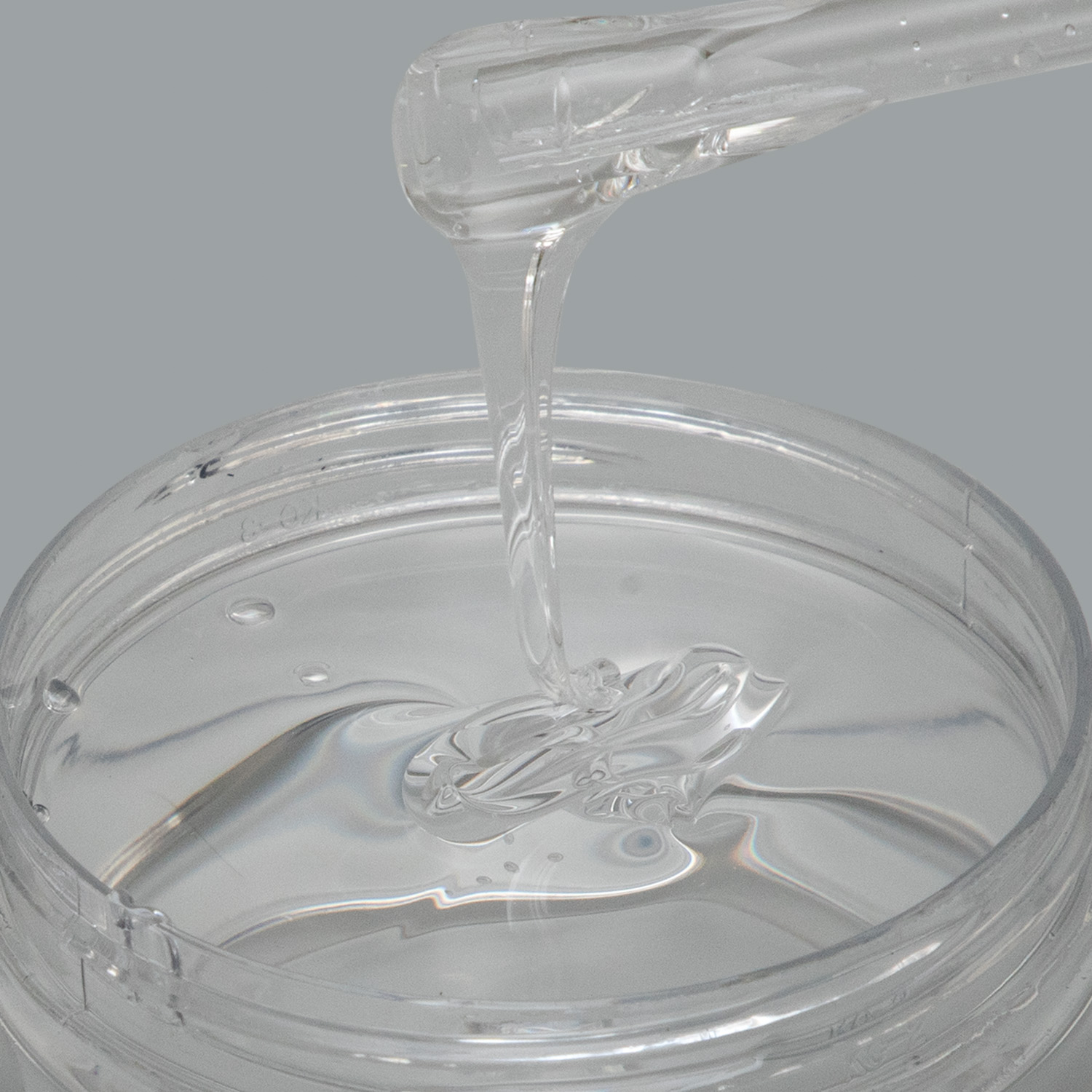
In the field of electronic manufacturing, the long-term stable operation of components relies on effective encapsulation protection. A new low-viscosity, transparent electronic potting compound—LSR 3300G—is gaining increasing attention from engineers due to its excellent fluidity and reliable protective performance.
This product is a condensation-type silicone rubber with extremely low viscosity (2000–3000 mPa·s) and good fluidity, allowing it to easily fill small gaps and achieve seamless encapsulation. Its transparent nature facilitates visual inspection and troubleshooting of components after encapsulation, making it particularly suitable for precision devices such as consumer electronics, LED modules, and sensors that require an aesthetically pleasing appearance.
In addition to excellent fluidity, LSR 3300G also possesses good electrical insulation properties. Its breakdown voltage is as high as 20 kV/mm, and its volume resistivity exceeds 10¹⁴ Ω·cm, effectively preventing circuit breakdown or leakage in high-voltage environments. Meanwhile, its dielectric constant remains stable between 2.7 and 3.3, with a dielectric loss below 0.02, ensuring signal transmission stability.
In terms of temperature resistance, this product can operate stably within a wide temperature range of -50°C to 250°C, adapting to extreme high and low-temperature environments. Although its flame retardancy rating is UL94-HB, meaning it does not possess high flame retardancy, its waterproof rating reaches IPX4, making it suitable for daily humid and splashing water scenarios.
In terms of operation, this adhesive is a two-component system (A:B=10:1) with a pot life of 50–60 minutes, allowing for easy adjustments during application. The curing time is 8–10 hours, and it can achieve basic curing at room temperature within 24 hours. It is worth mentioning that it exhibits good adhesion to various materials and can firmly attach to the surface of electronic components without additional treatment.
LSR 3300G is not only suitable for conventional electronic module potting but also widely used in fields such as photovoltaic junction boxes, automotive electronics, and communication modules that require high transparency and insulation. Its characteristics of low viscosity, high transparency, and ease of operation provide a solid guarantee for the long-term stable operation of electronic components.