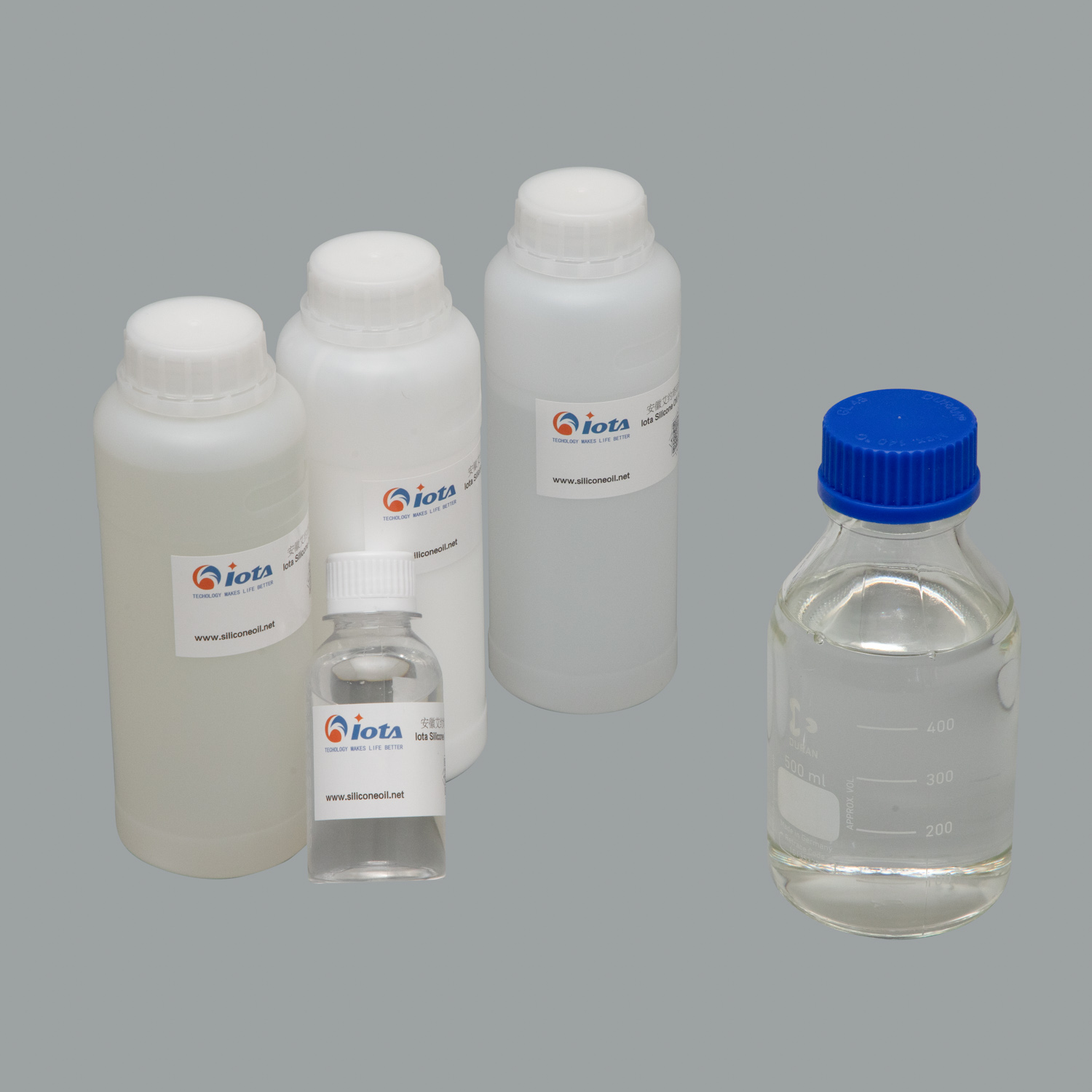
In the field of resin processing, improving material properties such as flexibility and impact resistance is a common industry demand. Terminal phenolic-modified silicone oil (coded as IOTA 28723/28724/28725/28729) has become a high-quality choice to meet this demand due to its unique characteristics.
In terms of appearance, the product is a colorless to light reddish-brown transparent oily substance with a pure texture and no impurities. It can be well integrated into various processing processes without affecting the appearance of the finished product.
In terms of core performance parameters, it shows stable performance: at 25°C, the density ranges from 0.970 to 0.990 g/cm³, which is similar to the density of water, allowing enterprises to accurately control the dosage without complex conversions during batching; the refractive index is between 1.406 and 1.430, which is suitable for the processing needs of most transparent resins and will not reduce the light transmittance of the finished product after mixing; the viscosity is divided into four levels according to different models, from IOTA 28723 (60-120 mm²/s) to IOTA 28729 (190-230 mm²/s), which can meet the process scenarios with different fluidity requirements. At the same time, the product's volatile content is ≤1.0%, so there is almost no impurity generation due to volatilization during high-temperature processing, ensuring the quality of the finished product; in terms of chromaticity, IOTA 28723 is ≤100 Pt-Co, and the other models are ≤50 Pt-Co, which can largely avoid color defects in the finished product.
The core advantage of this product lies in its "phenolic-terminated" structure. Phenolic groups have strong reactivity and can efficiently combine with resins such as polycarbonate, polyester, and polyurethane — either through copolymerization or blending — to easily achieve material modification; at the same time, phenolic groups themselves have excellent heat resistance and anti-aging properties. After modification, they can significantly improve the flexibility and impact resistance of the resin. For example, polycarbonate products that were originally brittle are less likely to break when dropped; it can also enhance the heat resistance and anti-aging properties of the resin, extend the service life of the product, and even improve the flame retardancy, making the finished product safer to use.
In terms of application scenarios, it is mainly used for polycarbonate modification to solve its performance shortcomings; it can also be used for the modification and processing of other polymer resins such as polyester and polyurethane; in addition, it can be used to formulate lubricating oils to reduce mechanical wear, or as a release agent to allow finished products to be easily removed from the mold without damaging the surface of the finished product.
In terms of packaging, the product is available in three specifications: 20KG (25L barrel), 200KG (200L barrel), and 1000KG (1000L plastic barrel), which are suitable for the needs of different production scales; when stored in a sealed container at room temperature, the shelf life is as long as 24 months, facilitating enterprises to stock up for long-term use.