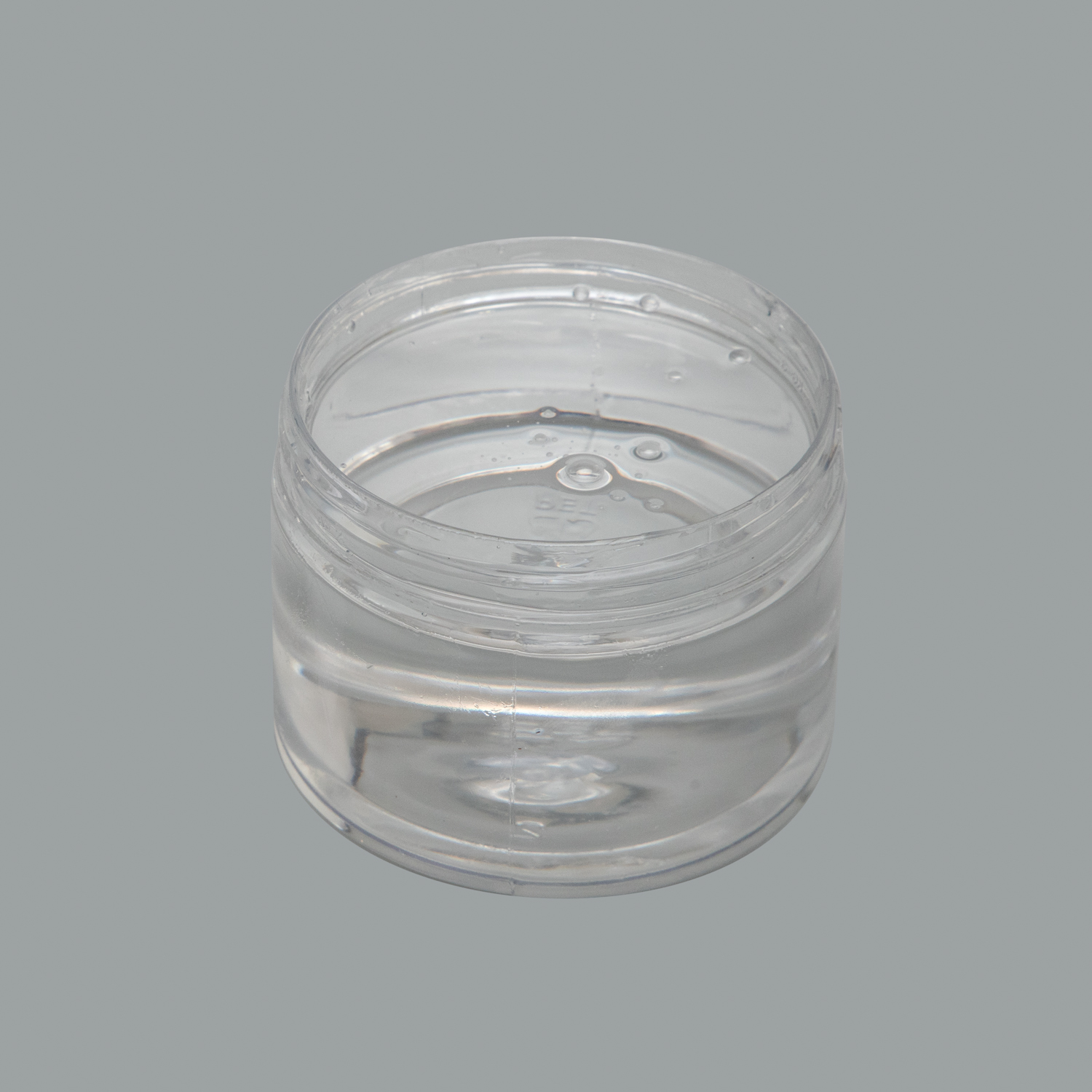
In precision manufacturing fields such as electronics, automotive, and solar energy, the light transmittance, insulation, and adaptability of materials directly affect product performance. Relying on its high light transmittance, strong insulation, and flexible application characteristics, silicone gel IOTA-5118AB provides reliable guarantees for the bonding and potting of core components in multiple fields.
The most prominent advantage of this product is its excellent light transmittance. Before curing, both Component A and Component B are colorless and transparent liquids; after mixing, there is no precipitation or turbidity, and a transparent gel is formed after curing with a light transmittance exceeding 99%, which can maximize the retention of the light transmission effect of the base material. For example, in display production, using it to bond glass coverslips to polarizers will not affect the screen display clarity and color reproduction; when used for solar cell potting, it allows sunlight to penetrate efficiently, ensuring the power generation efficiency of the cells. At the same time, its refractive index is stably maintained at 1.404, which has a high matching degree with the refractive index of base materials such as glass and transparent plastics, avoiding visual deviations or energy loss caused by light refraction.
Its electrical properties are equally impressive, providing safety protection for electronic and automotive components. After curing, the volume resistance reaches 10¹⁶ Ω·cm and the surface resistance reaches 10¹⁴ Ω—its insulation performance is far superior to ordinary insulating materials, which can effectively insulate current and prevent short circuits of electronic components; the relative dielectric constant is 2.7 and the dielectric loss is only 10×10⁻⁴, enabling it to maintain stable electrical performance even in high-frequency environments and reduce signal interference; the dielectric strength is 23 kV/mm, which can withstand high-voltage impacts, making it suitable for potting protection in scenarios such as automotive electronics and high-voltage components.
Application flexibility meets diverse needs. The mixing ratio is easy to control: Component A and Component B can be mixed at a 1:1 ratio, and efficient operation can be achieved with either manual or automatic glue mixing equipment. The pot life after mixing is 1.5 hours (at 25°C), facilitating batch preparation and use. The curing conditions are flexible: it can cure naturally at room temperature; if it is necessary to speed up the production rhythm, curing can be completed within 30 minutes at a high temperature of 150°C, and the higher the temperature, the faster the curing speed, which adapts to different production processes. To meet different hardness requirements, the ratio of Component A to Component B can be adjusted—ranging from softer sticky gel to slightly harder gel, easily satisfying the performance requirements of different scenarios such as bonding, potting, and damping products. In addition, dyes can be added to achieve coloring, adapting to personalized appearance needs.
The storage and packaging design is user-friendly: both Component A and Component B are available in two specifications (15KG and 180KG) and supplied in matched sets, avoiding waste caused by leftover single components. Stored in a sealed environment at 5-30°C, it has a shelf life of 6 months, no special storage equipment is required, reducing the storage costs of enterprises. When using, it is only necessary to ensure that the surface of the base material is clean and avoid contact with substances such as sulfur, phosphorus, and organotin that affect curing, so as to ensure stable product performance.