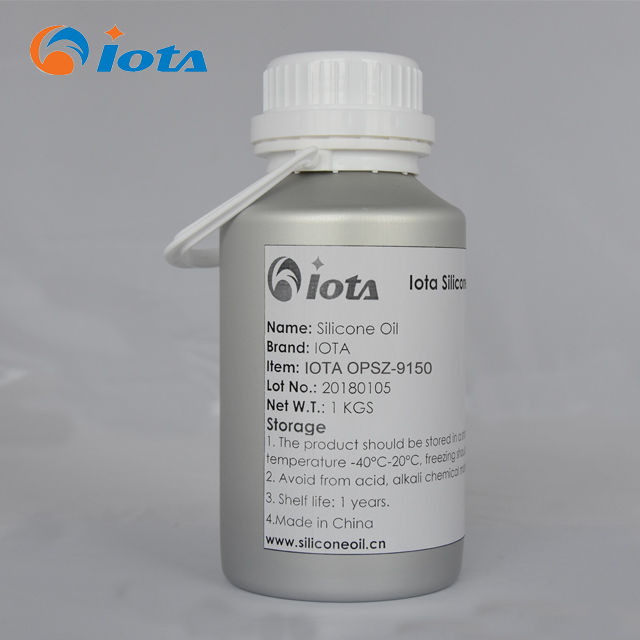
Whether it’s metal components in industrial production or glassware and plastic products in daily life, proper surface protection is essential to extend their service life. An organopolysilazane material named IOTA 9150, with its features of **corrosion resistance, easy cleaning, and wide applicability**, has become a "new favorite" in the field of substrate protection.
Let’s start with its protective performance, which is the top concern for most users. After curing, this material forms a dense protective film on the substrate surface—like a "protective coat" for the substrate—effectively blocking oxygen, water, and other substances from contacting the substrate. For example, after metal components are coated with it, they are less likely to rust even when exposed to a humid environment for a long time. When applied to glass surfaces, it not only resists scratches but also prevents stain adhesion; during daily cleaning, a simple wipe with a cloth is enough to restore the glass to its clean and transparent state, greatly reducing cleaning difficulty.
Its applicability is also remarkable: it can firmly adhere to various materials, including metals, alloys, ceramics, graphite, and plastics such as polypropylene, polycarbonate, and polyvinyl chloride. When tested for metal adhesion using the cross-cut test method, it achieves a Grade 0 standard—meaning the coating bonds extremely tightly with the substrate and will not easily peel off even when subjected to external friction or impact. Moreover, it offers flexible application methods: depending on different substrates and application scenarios, wiping, brushing, spraying, or dipping can be chosen. The operation is simple, and even non-professional operators can master it easily.
It also takes into account performance details comprehensively. Its solid content is ≥99%, and it can be customized according to customer needs. During preparation, diluting it with an appropriate solvent at a ratio of 1:(3-8) can meet the requirements for coatings of different thicknesses. The hardness of the cured coating is also impressive: it reaches 7H after 24 hours of room-temperature curing, and 4H-5H after thermal curing. This effectively resists daily scratches, ensuring that frequently used items can maintain an intact surface.
In addition, its stability is reliable. In an unopened state, it can be stored for 12 months in a dry, cool, and ventilated environment at 0-20℃. Furthermore, its linear shrinkage rate is less than 1%, so the coating will not crack or deform due to volume shrinkage after curing, maintaining stable performance for a long time.
This material can play a significant role in multiple fields such as automotive, construction, electronics, and composite materials. As an automotive coating, it can enhance the brightness of the car’s appearance and protect the body from corrosion; when used on architectural glass, it resists dirt and scratches, reducing cleaning costs; when added to polymer-based composite materials, it can improve the overall performance of the material. It is believed that as more people learn about its advantages, it will be used in more fields and provide better solutions for substrate protection.